
FLAME OFF!
Why Superheroes Are Holding US Comics Back

Preface: I love superhero comics. Please keep that in mind as you read. Now, go!
Earlier today, I read an article by writer Cliff Clumber about how Corporations are Killing Big Comics. He raised some great points, centered mostly around the lack of new characters and the perpetually abysmal state of creator’s rights as the main factor behind that deficit. I don’t disagree with most of his points and I think if you follow this idea to its logical end, you end up where my take on the subject begins.
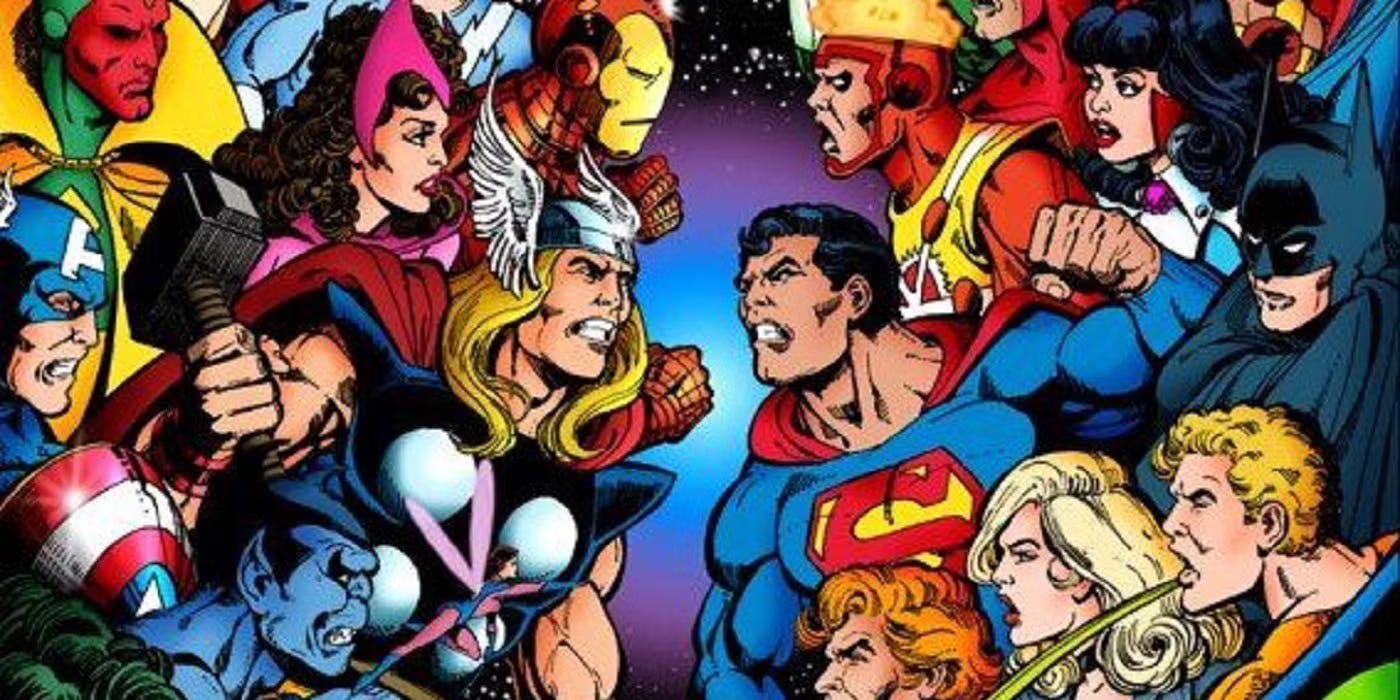
I think most people who ponder the question of why the BIG TWO comic publishers, Marvel and DC, seem to be stagnating over the past decade or two (DC to a lesser degree thanks to the popularity of the Absolute line. Put a pin in that), may be missing the most painfully obvious reason. It’s not just the lack of new characters stunting new reader interest, or the way creators are compensated for their contributions, although this has always been a major issue that never seems fixable by anything less than a full scale creative mutiny, as we’ve seen with the founding of Image Comics. (Put a pin in that too). The bigger cause has to do with the fundamental nature of what comprises most mainstream comics in the U.S.
What do the top independent comic publishers like Image, BOOM! Studios, IDW and Dark Horse have in common with European comics and Japanese manga publishers? It’s the sheer variety of genres being offered. If we look at manga specifically, you’d notice a wide array of genres from sports, cooking, fantasy, slice-of-life, romance, action and so on. Similarly, European comics, while there are superhero stories to be found, have always had a slant toward sci-fi, war and crime noir.
US mainstream comics have had a primarily superhero-centric focus for nearly a century now. So much so that if you ask the average comic consumer in the US about comics, the conversation will most likely steer toward a specific hero that the person has had a lifelong affinity for. Mine is Batman because he’s the best and it’s honestly the only logical choice because any other choice is just wrong and I’ll fist-fight you in the street right now! But I digress. If you view the Big Two US publishers (Marvel and DC) in a vacuum, you’d probably view the entire industry as being growth averse. Both publishers, in their own ways, have been locked in a pattern of presenting massively structured “event” comics and initiatives that have done little to gain new readership. For DC, however, one initiative seemed to light quite the spark.
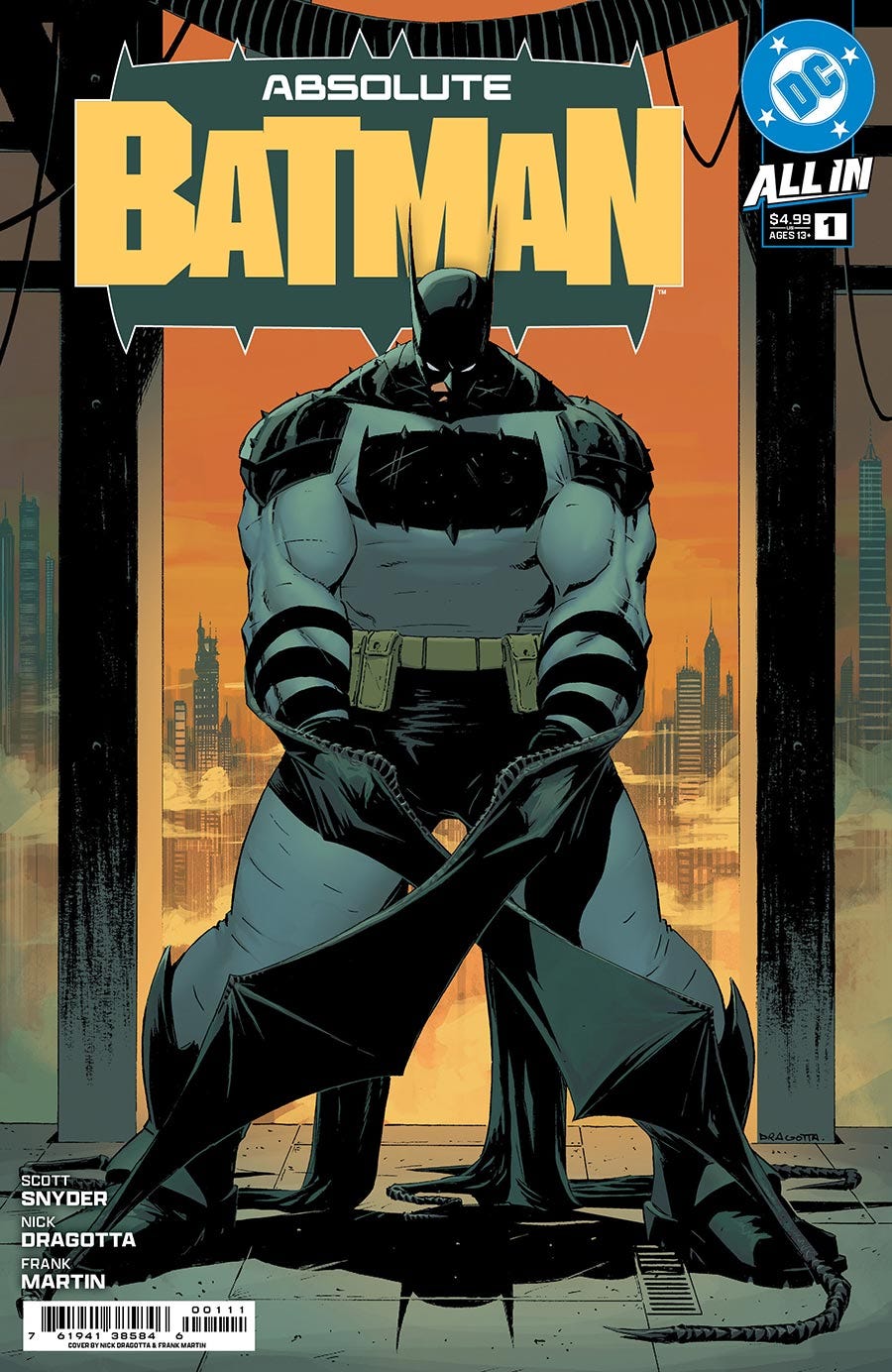
(Absolute Batman #1 cover art by Nick Dragotta)
DC’s Absolute initiative has caught fire in a big way, sending a surge of new readers and lapsed readers into a feeding frenzy. It’s the flagship of the line, Absolute Batman, that led the charge with issue #1 receiving ten reprints. Is it a good story? Sure! Is it a dynamic twist on the character? I would say so. But what I believe to be the driving force behind its success is that series artist, Nick Dragotta, has a very manga influenced style with his focus on kinetic action scenes and page layouts. I firmly believe this caught the eyes of many younger readers who have shifted away from superhero comics to focus on manga. Again, this traction is limited because as great and enticing as the Absolute line has been, it offers nothing for readers who don’t fancy superheroes. Those readers tend to flock to indie publishers who provide a varied assortment of genres and to manga. But, how popular could manga be in the US, anyway?
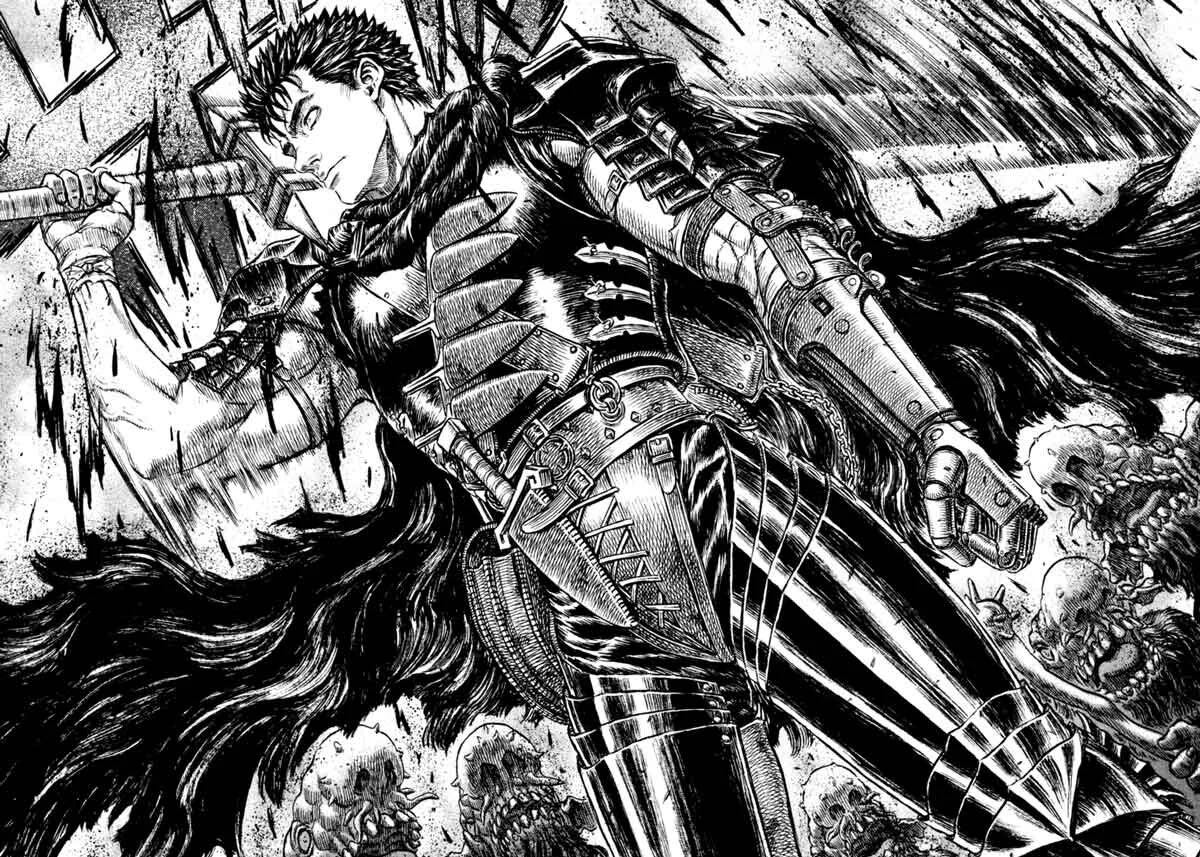
Manga is super popular in the US, among comic readers, that is. Currently, manga accounts for 43% to 45% of the comic market share in the US, consistently outperforming the top three mainstream comic publishers. Projections show that over the next decade, manga sales are predicted to maintain a compound annual growth rate of 19% to 24%. But why? What is driving this growth and what can mainstream US comics do to compete? The answer to the first part of the question lies in the previously mentioned narrative and genre diversity of manga. Many comic reader may feel their options to be limited because of how ubiquitous US comics are with superheroes. These readers, in part, due to the rise of anime, have been guided toward the print inspirations for many of their favorite anime and discovered the vast sea of options that manga has to offer. The answer to the second part of the question (...what can mainstream comics do to compete?) can be found by studying the evolution of Image comics.
If you’re reading this, then you probably don’t need a primer on the founding of Image Comics. Long story short, in the 90s, Marvel had some serious bad-asses cranking out banger after banger. Comic sales exploded. Creators became the focus and Marvel responded by—wait for it—not doing a damned thing to compensate them. So, those same bad-asses said, ‘I guess we’ll have to take our bad asses and go into business for ourselves’ and so they founded Image Comics.
From its inception, Image focused on creator ownership and pushing the medium to its limits. Image became a legitimate alternative to the Big Two and created their own loosely connected superhero universe while also offering books that wouldn’t have fit anywhere else, but somehow worked. (The Maxx is the first that comes to mind). As popular as Image was, they too began to briefly stagnate until they made a gradual pivot to include books in their line that spanned many genres. Some of these standouts include The Walking Dead, Saga and many titles from the legendary team of Ed Brubaker and Sean Phillips. Fast forward to the present day and Image had held firmly as the third largest comic publisher in the US and it was specifically due to looking beyond superhero comics as their main draw. Now, diversity of choice is their main feature.
In my opinion, had Image not expanded to include books from every genre and instead, tried to continue their superhero shootout with Marvel and DC, it’s a strong possibility they would have gone under. Other independent publishers are thriving based on this diversity. This seems to be the thing that the Big Two are either unable or unwilling to correct. I think the overall market in the US has gradually reached a bit of a superhero fatigue among readers. My question is, these gigantic corporations have resources and presumably executives whose job it is to follow and predict these trends. Why have they not figured out that creating imprints, separate from their superhero universe, with diverse genres and creator incentives to create new and exciting stories and characters for an ever changing readership, would be the most advantageous move?
Again, DC seems to be slightly ahead of the curve on this since resurrecting their legendary Vertigo imprint. This is a big step in the right direction but it may not be enough to rally those voracious manga and indie publisher readers and bring them into the fold. Maybe, in terms of the health of independent/creator owned comics, it would be best if they didn’t. On the other hand, with the sheer volume of amazing talent within the indie scene currently, many would jump at the chance to show off their talent in the “big leagues”, as long as they were allowed to properly do their thing and take big narrative and visual swings and somehow not get shafted in the process.
I’ll talk to you soon,
-Steve